
Brand tone of voice is how you communicate your company’s personality and values through word choice and sentence structure.
It shapes the impression your brand conveys through messaging.
Think about the brands you can recognize instantly by their voices.
Wendy’s doesn’t just post — they roast.

Nerd Fitness invites you to join a “Rebellion” of supportive nerds, complete with “Star Wars” references.

Mailchimp explains marketing topics like a knowledgeable friend would over coffee: simple, relatable, and jargon-free.

You want that for your brand. A voice that’s unmistakably yours.
One that makes customers feel something. And makes your team proud of how you show up.
But you can’t get there just by filling out a template.
The brands you admire did the harder work of figuring out what they actually believe. (And what they refuse to sound like.)
That’s what this guide is for.
And it’s going to ask more of you than most: 3-4 focused hours with your team, honest conversations, real decisions.
The payoff is a voice that’s genuinely yours, and the internal clarity that comes with it.

Free workbook: We created a companion workbook to help you work through the four brand voice exercises below. It includes prompting questions for each exercise and space to synthesize your findings into usable guidelines. Download it and block time with your team.
3 Benefits of Developing Your Brand Voice
Developing (and maintaining) a strong brand voice has more impact than you might realize.
Here’s a quick look at some of the biggest benefits:
1. Builds Recognition
When your voice stays consistent across platforms, people start recognizing your brand before they even see your logo.

Consistency creates familiarity. And familiarity builds trust.
2. Differentiates You from Competitors
Many brands in any given industry sound the same: generic, safe, forgettable.
A distinctive brand tone of voice cuts through that noise.

It signals what makes you different and why someone should care about your brand over alternatives.
3. Attracts the Right Audience
Your brand voice acts as a filter.
The right voice attracts your ideal customers. The ones who align with your values and appreciate how you communicate.

At the same time, it naturally repels people who aren’t a good fit.
This filtering effect saves everyone time and helps you build a more engaged audience.
Brand Voice vs. Tone — What’s the Difference?
Before we go further, let’s clarify a distinction that trips people up: brand voice vs. tone.

- Your brand voice represents your overall personality and values. It’s who you are as a company. It stays consistent across all content types and platforms.
- Your tone is how you express that voice in different situations. It flexes based on context while staying true to your brand voice.
For example, a customer service email addressing a complaint needs a different tone than a playful social media post.
But both should reflect the same brand voice.
Think of it like this: You have one personality, but you speak differently to your best friend than you do in a job interview.
Your brand voice is consistent; your tone adapts.
4 Exercises to Discover Your Brand’s Distinctive Voice
It’s tempting to skip discovery entirely.
Jump straight to picking adjectives like “professional but approachable” or “friendly and trustworthy.”
But this describes roughly 80% of companies — and differentiates none of them.
Before you document your brand tone of voice, discover what you actually believe about how your industry communicates and where you disagree.
The four exercises below will help you get there.

Pro tip: Spend roughly 45 minutes to an hour on each exercise with your team. Use your workbook to document your findings. By the end, you’ll have a brand voice that’s uniquely yours.
Exercise 1: The “What Do You Hate?” Audit
Start with frustration.
It’s often easier to articulate what you don’t want to sound like than what you do.

Gather your team and ask:
- What phrases or approaches in our industry make you cringe?
- When you read a competitor’s content, what feels generic, dishonest, or lazy?
- What do customers dislike about the way your competitors (or industry) communicate?
- What communication patterns feel like everyone’s just copying each other?
The answers will reveal your positioning by contrast.
If you hate how your industry overcomplicates things, your voice becomes clarity.
If you hate the hard-sell tactics, your voice becomes consultative.
If you hate the corporate formality, your voice becomes human.
Let’s look at two tone of voice examples to see this in action.
Bark (the company behind BarkBox) could have communicated like every other pet subscription service. Functional, benefit-focused, forgettable.
Instead, they rejected the generic pet-product voice entirely.
Their voice mirrors how dog owners actually talk to and about their pets. It’s playful, slightly absurd, and full of personality.
For example, their website proudly announces that Bark is now co-owned by Hendrix, their new “chairdog.”

Their Instagram is full of memes and videos with funny captions that dog parents like and share.

And they post product launches, behind-the-scenes content, and pet care tips on their YouTube channel.
All with the same lighthearted, humorous brand voice.

They’re not just being funny for the sake of it.
Their voice choice stems from conviction. Pet brands can feel transactional and boring, so Bark decided to be the opposite.
The same strategy applies to Zillow.
The real estate industry has a trust problem, thanks to pushy agents, high-pressure tactics, and scammy listings.
Zillow’s voice counters all of it.
Instead of urgency-driven language like “Buy this home before it’s too late!” or “Act now or lose out,” they offer calm, helpful, data-backed guidance.

Their site and social accounts feature straightforward resources on deciding where to move, avoiding rental scams, and preparing to sell your house.

This positions them as trustworthy and helpful, the direct opposite of what people don’t like about the real estate industry.

This is why starting with frustration works.
When you identify what you refuse to sound like, your distinct voice emerges naturally.
Further reading: 10 Ways to Create Helpful Content + Examples and Checklist
Exercise 2: Find Voice Mentors Outside Your Industry
Blank-page voice development is nearly impossible. You need reference points.
But here’s the key: look outside your industry.
If you only study competitors, you’ll end up sounding like a slightly different version of them.
Identify three brands from completely different spaces whose communication you genuinely admire.

For each one, get specific:
- What exactly do you like? Is it their sentence structure? Their humor? Their willingness to take positions?
- How do they handle complexity? Do they simplify or embrace nuance?
- What’s their relationship with the reader — peer, teacher, friend, challenger?
- How do they balance authority with accessibility?
Now ask: What would this approach look like applied to your context?
A SaaS company inspired by Patagonia’s conviction-driven voice would sound very different from one inspired by Wendy’s irreverent humor.
But both starting points are more distinctive than “professional but approachable.”
You might admire how The Economist makes complex topics feel accessible without dumbing them down.

Or how Duolingo’s social media treats language learning as genuinely fun rather than a chore.

Or how a chef like Samin Nosrat explains cooking techniques with warmth and authority simultaneously.

Maybe none of these brands are in your industry.
But their approach to communication might translate.
The goal isn’t to copy. Seek to understand what “good” looks like outside your industry and adapt those principles to your context.
Further reading: How to Create a Content Strategy in 6 Steps
Exercise 3: Identify the Friction Your Voice Should Solve
Every industry has a communication problem. Your voice can be the solution.
Identify at least three leaders in your industry.
Then spend some time reading through their customer reviews, social media comments, and customer forum posts on Reddit, Quora, and niche Facebook Groups.

What do users complain about?
Content that feels robotic or impersonal? Using too much jargon without explaining it? Talking down to them?
This will give you insight into the friction your voice should solve.
This reframes the tone of voice from an aesthetic choice (“what sounds nice?”) to a strategic one (“what does our audience need from us?”).
Ask: Where do your customers experience confusion, frustration, or distrust when dealing with companies like yours?
- If the friction is skepticism about quality, your voice becomes proof-heavy and transparent
- If the friction is feeling like a number, your voice becomes personal and specific
- If the friction is boredom, your voice becomes energetic or unexpected
- If the friction is intimidation, your voice becomes welcoming and judgment-free
At Backlinko, the friction we identified was that SEO and marketing content is often unnecessarily complex.
Jargon-heavy. Dense paragraphs. Written for experts, not learners.
Our voice exists to solve that friction.
We write at a grade 6-7 reading level.
And use visual break density — images, screenshots, and examples throughout — so we can show as much as we tell.
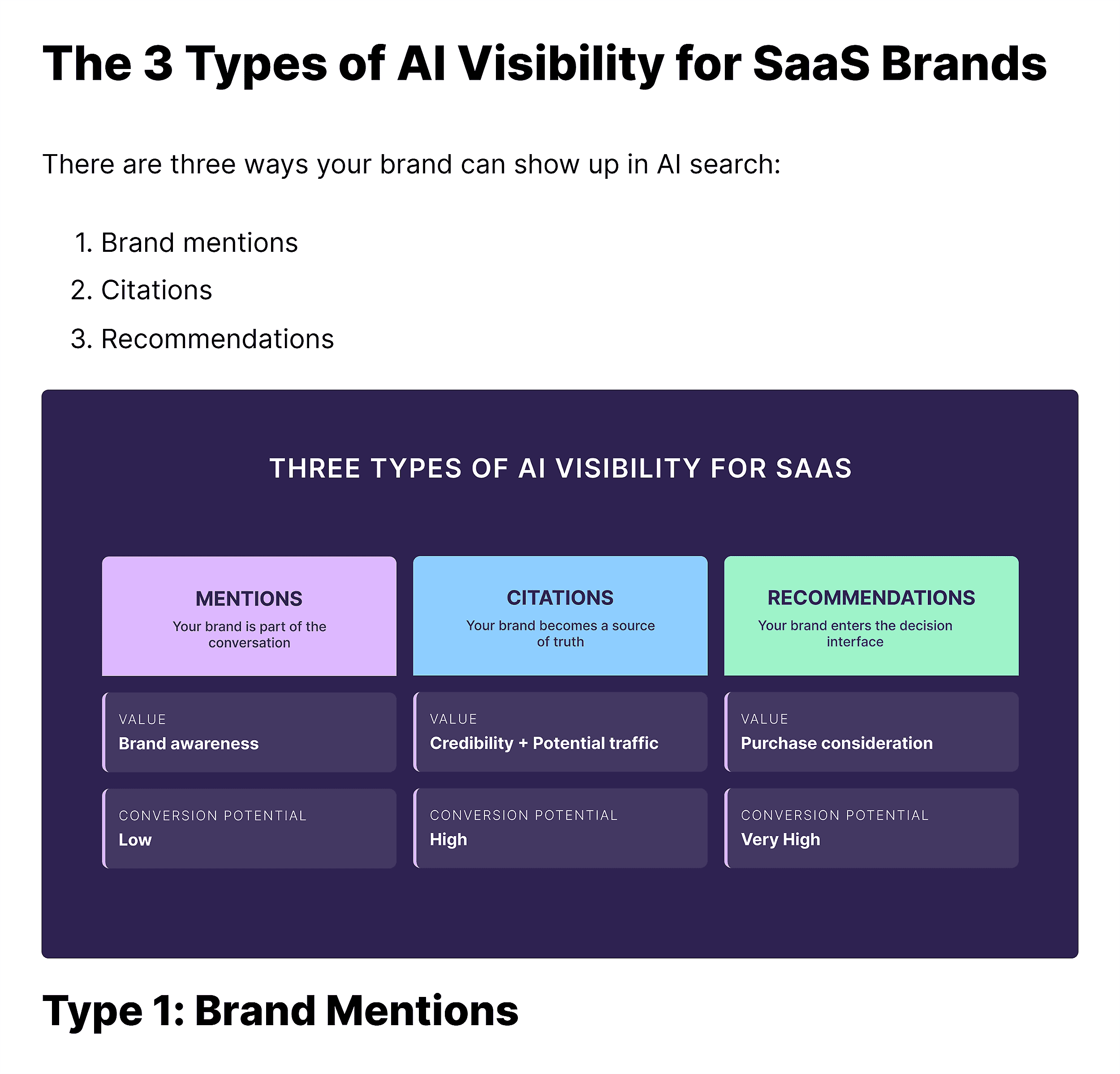
We also use punchy lines and single-sentence paragraphs.
Everything is designed to make technical topics accessible.

This is a stylistic preference, of course.
But it’s also a strategic response to a real problem our audience faces.
Eharmony is another example.
Its friction point is the superficiality and exhaustion of modern dating apps.
Swipe culture. Matches that go nowhere. Feeling like you’re performing rather than connecting.
Their voice solves this with four words: “Get who gets you.”

It evokes genuine connection over fleeting attention.
Their ad copy shows small moments of acceptance — a partner giving you another plant even though you’ve killed every one before — rather than flashy romance.

Identifying the friction in your industry gives your brand tone of voice a job to do beyond sounding nice.
Further reading: How to Build a Content Distribution Strategy
Exercise 4: Mine Your Existing Communication
Your authentic voice already exists. It’s just buried in places you likely haven’t looked.
Pull samples from your unguarded moments:
- How the founder or CEO responds to customer complaints (not the templated responses — the unfiltered ones)
- Internal Slack messages when the team is excited about something
- Emails to your best customers
- Social media replies that got unusually high engagement
- Sales calls where you landed the deal
Gather at least 5-10 examples from the list above. The more variety, the better.
Then, analyze them as a team.

Compare your findings with each other.
You’re looking for patterns that reveal your authentic voice.
- What words or phrases show up in multiple samples that you never use in marketing? (Or should use more?)
- Which messages got the strongest positive response? What made them work?
- How formal or informal does it get when no one’s performing?
- Where does genuine enthusiasm show up?
- What language do customers use to describe you that you should adopt?
Next, get an outside perspective. Ask an AI system like ChatGPT or Claude to analyze the same samples.

Upload your brand voice examples and use this prompt:

Analyze the tone of voice in these content samples. Identify:
- The dominant voice characteristics (formal vs. casual, serious vs. playful, direct vs. diplomatic)
- Words and phrases that appear repeatedly across samples
- The natural sentence rhythm and structure
- Where enthusiasm and personality show up most strongly
- Any gaps between how internal communication sounds vs. external marketing
- Specific phrases or quotes that best represent the authentic voice
You might discover that your CEO’s emails are surprisingly direct and funny, but your marketing materials are stiff and corporate.
The authentic voice is in the emails. Your marketing just hasn’t caught up.
Or you might find that customers describe you in ways you hadn’t considered.
They might say things like “finally, someone who explains this without making me feel stupid” — which tells you exactly what your voice is doing right, even if you never articulated it.
The goal is to find where your voice already works and make that the standard, rather than inventing something from scratch.
Pro tip: Use Semrush’s SEO Writing Assistant to check your content for tone of voice consistency. The tool scores your text on a scale from casual to formal, highlights sentences that don’t match your overall voice, and helps you maintain voice consistency across every piece of content you create.
How to Turn Brand Voice Discovery Into Guidelines
Once you’ve done the discovery work, documentation is easy.
Follow these steps to put your brand tone of voice into guidelines your whole team can use.
Define Your Core Brand Voice Attributes
Based on your discovery exercises, identify three attributes that capture your voice.
These should flow naturally from what you learned:
- From the “What Do You Hate?” audit: What’s the opposite of what you rejected?
- From your voice mentors: What qualities do they share that you want to adopt?
- From the friction exercise: What does a solution-oriented voice sound like?
- From your existing communication: What patterns emerged?

Three attributes are enough.
More than that becomes hard to remember and apply.
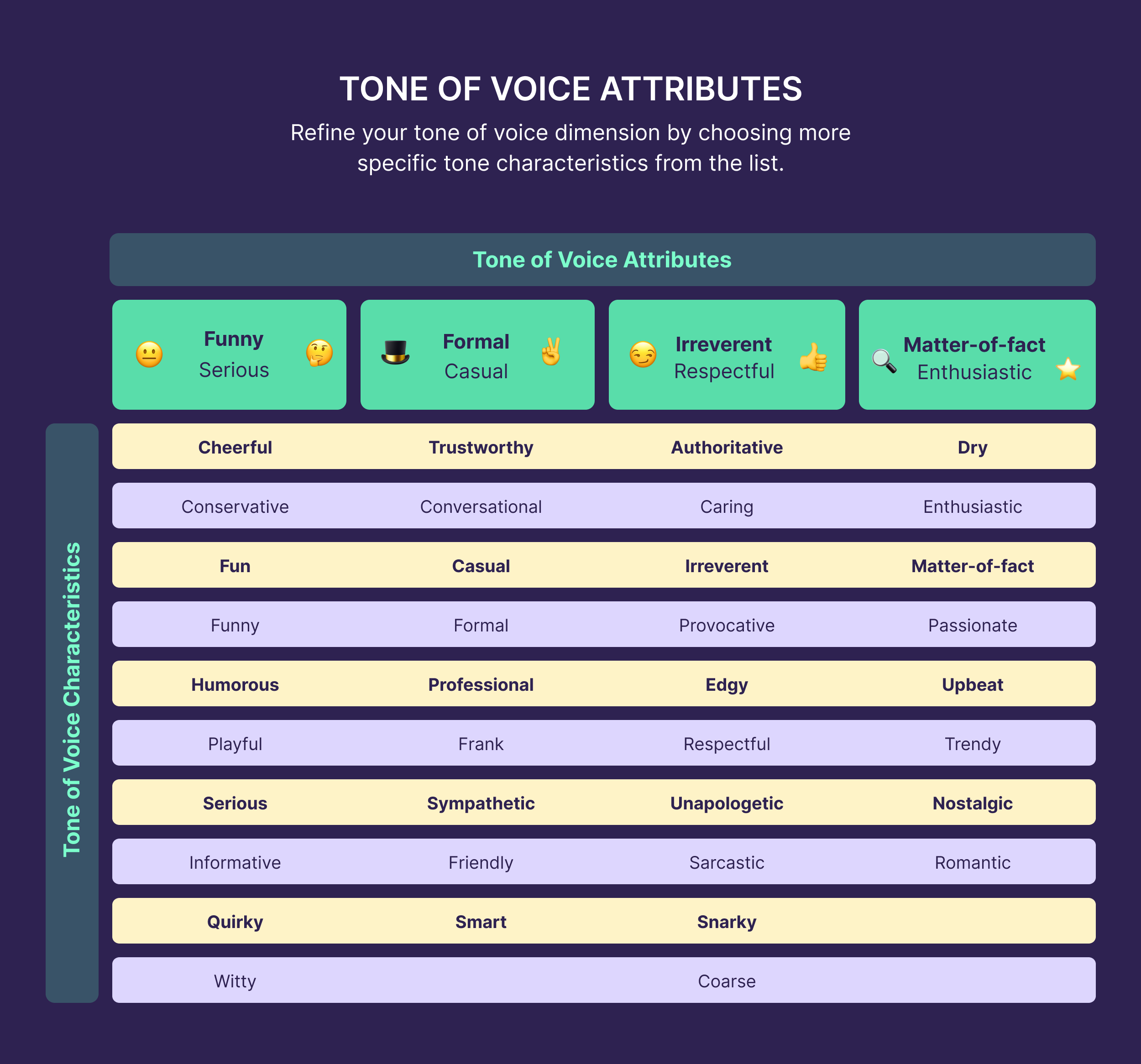
Ask each team member to independently come up with a list of three attributes.
Then, compare where your lists overlap and differ, and why to select the winners.
Pro tip: Upload your workbook findings to Gemini, ChatGPT, Claude, or Perplexity and ask it to identify three core attributes. Does the AI align with your team’s choices, or does it surface something you hadn’t considered?
For each attribute, write a sentence explaining what it means in practice for your brand.
Mailchimp does this in its content style guide.
For example, they describe their voice as “plainspoken” and then follow it up with crucial context.
They specify: No “fluffy metaphors” or “cheap plays” for emotion. This turns an abstract adjective into clear direction.

Further reading: How to Use AI for Writing Exceptional Content
Create a Vocabulary Guide
Document the words and phrases that fit your voice and the ones that don’t.
Start with the words your team should use in various communications.
If you’re rejecting corporate jargon, what do you say instead? If you’re aiming for accessibility, what familiar words replace the technical ones?

Next, list the words to avoid.
These will come directly from your “What Do You Hate?” audit.
What phrases do competitors use that you’d never use? What clichés make you cringe?

If approachability is a core attribute, you might avoid words like “leverage,” “optimize,” “synergy,” and “robust.”
You might prefer “use,” “improve,” “work together,” and “strong.”
Document Tone Variations by Context
Your voice stays consistent, but your tone needs to change based on the situation.
In your guidelines, explain to your team how they should adapt the tone for different contexts while staying true to your brand voice.

For each context, answer the relevant questions:
- Social media: How casual can you get? Is humor appropriate?
- Customer service: How do you handle complaints? Frustrated customers?
- Sales materials: How do you balance persuasion with authenticity?
- Technical content: How do you maintain accessibility while being accurate?
- Sensitive topics: How does your tone shift for difficult news or serious subjects?
You don’t need to script every scenario. Just establish the principles so your team can make good judgment calls.
Add Examples Your Team Can Reference
Include samples of your voice done well (and done poorly).
Pull the best brand voice examples from your “Mine Your Existing Communication” exercise.
These become the reference point for new content.

If possible, show before-and-after examples: “Here’s how we used to write this. Here’s how we write it now.”
This makes the guidelines actionable rather than theoretical.
Keep It Usable
A one-page document works better than a 50-page manual nobody reads.
The goal is to give your team enough clarity to make good decisions without constantly asking for approval.
Start simple. Expand the guidelines only when you see consistent problems that need addressing.
If you need a comprehensive guide, consider adding a quick-view summary.
Mailchimp did this to reinforce its key brand tone of voice points:

Define Your Brand Tone of Voice Today
Developing a distinctive tone of voice helps you stand out in your industry.
And it all starts with discovery.
Figure out what you actually believe about communication in your niche, what you refuse to sound like, and what problem your voice solves for customers.
That’s how you build a voice worth remembering.
If you haven’t already, download our Brand Voice Discovery Workbook to work through these exercises with your team.
Once you’ve nailed your brand voice, the next step is making sure people actually see your content.
Learn how to show up across every platform where your audience searches with our Search Everywhere Optimization guide.
Backlinko is owned by Semrush. We’re still obsessed with bringing you world-class SEO insights, backed by hands-on experience. Unless otherwise noted, this content was written by either an employee or paid contractor of Semrush Inc.